

Moroccan cuisine at Camp Chraika: food is part of the journey
At Camp Chraika, Moroccan cuisine grows out of the desert environment and the rhythm of life on the edge of the Sahara. Meals are prepared on site, using local products sourced in nearby villages and markets, with recipes shaped by Amazigh traditions and desert practicality.
Food here forms part of the journey — a pause between travel days, a shared moment after time spent walking, driving, or crossing open landscapes.
Location
Desert Camp Chraika, Mhamid 47402, Morocco
Our restaurant in the heart of the Sahara
Our restaurant is a living experience of traditional Moroccan food and nomadic hospitality.
We cook not only in our clay kitchen at the camp, but also outdoors, lighting fires among the dunes just as the desert tribes have done for centuries.
Every dish is homemade and full of soul: from slow-cooked tagines and harira soup to bread baked directly in the hot sand.
You don’t need to stay overnight to dine with us — outside guests are welcome too!
Just remember to book in advance, as every meal is prepared from scratch with ingredients we buy fresh the same day.


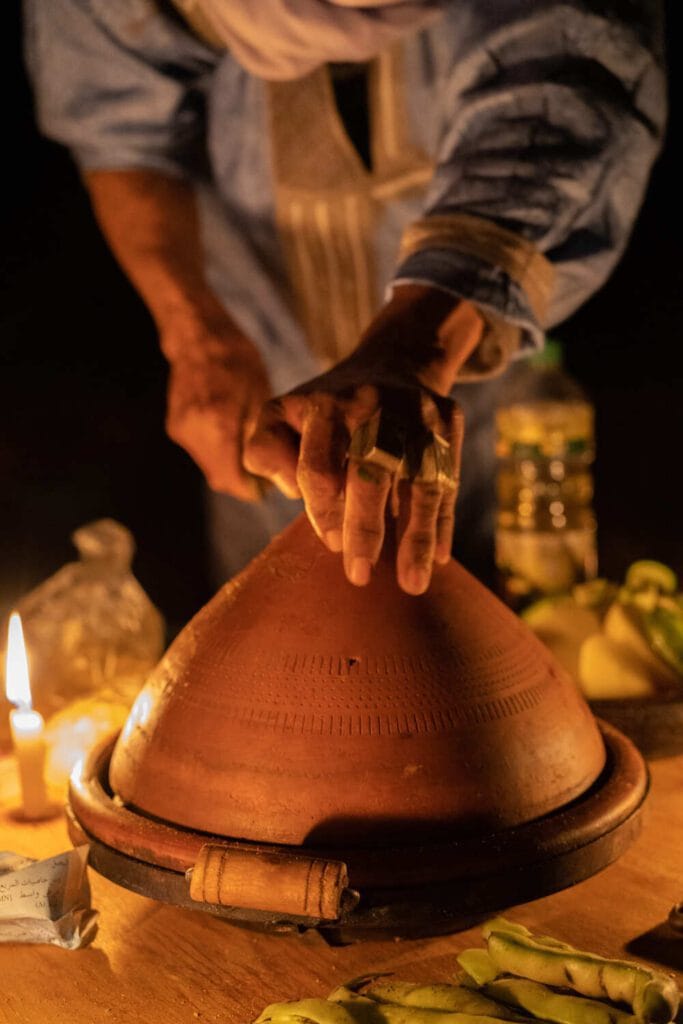
Traditional Moroccan food: simple, yet rich and flavorful
Simplicity defines the beauty of Moroccan cooking. Dishes are cooked slowly, often in one pot, with vegetables, grains, herbs, and spices that suit the climate and season. This way of cooking allows flavours to develop fully, blend naturally, and deepen over time, bringing out the richness of even the simplest ingredients.
Meals reflect what is available locally and what works in desert conditions. Portions are generous, flavours balanced, and preparation unhurried.
Our signature dishes and daily menu
Our guests can enjoy a variety of traditional dishes, including:
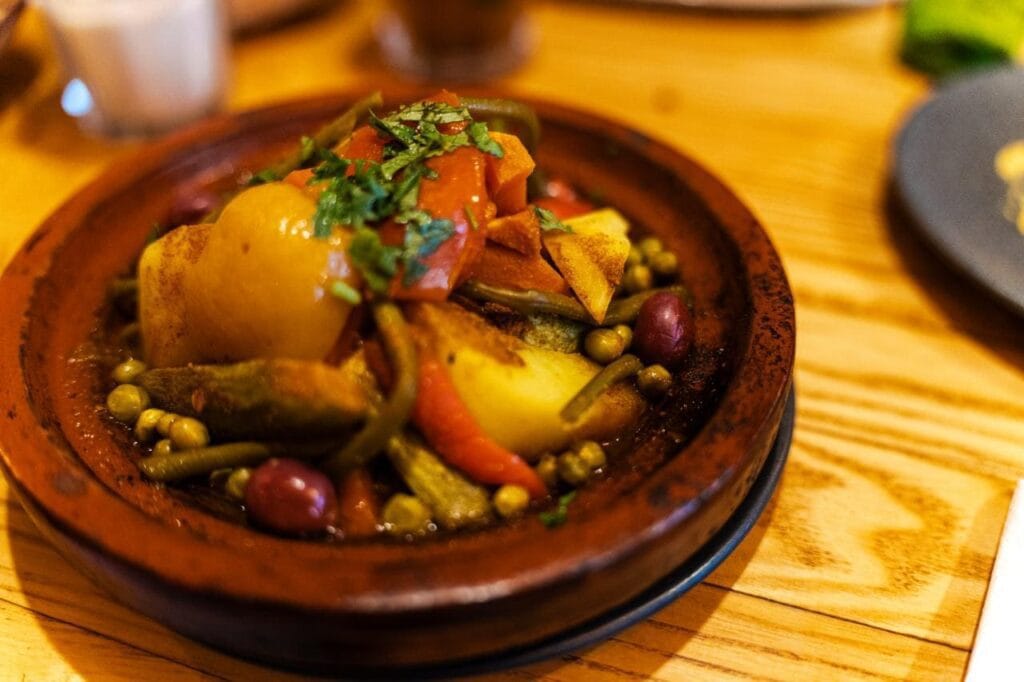
Slow-cooked to perfection with Moroccan spices, the tagine bursts with rich aromas and tender meat or vegetables. Served hot in traditional clay pots, it’s a true symbol of desert comfort food.
Steamed to a light, fluffy texture and paired with fresh, colorful vegetables. This dish is often enjoyed with a drizzle of olive oil and a hint of cumin for an authentic Moroccan flavor.
A hearty blend of tomatoes, lentils, and chickpeas, often served to break the fast during Ramadan. Its warm spices and rich texture make it the perfect start to any meal in the desert.
Baked directly under the hot desert sand, this bread has a unique aroma and rustic crust. It’s soft inside, ideal for scooping up tagine or dipping into olive oil.
Made with fresh tomatoes, cucumbers, and herbs from local gardens, these salads bring brightness to every table. The drizzle of pure olive oil enhances the natural flavours and freshness of each bite.
Would you like to learn how to cook tagine yourself?
Our cooking workshops offer a practical introduction to Moroccan desert cuisine. Together with our cook, you prepare a complete meal using local ingredients and traditional methods adapted to desert conditions.
The workshop includes cooking tagine over an open fire, baking bread in heated sand, and learning how spices and timing shape flavour. Everything happens step by step, at a natural pace, with time to ask questions and take part in each stage.
Meals are shared together after cooking, either at large tables or on mats under tamarisk trees. The workshop fits naturally into the rhythm of camp life and forms part of longer desert stays.
Traditional pastries and sweets in Moroccan cuisine
Gazelle Horns
Another classic Moroccan sweet is Gazelle Horns ("Kaab el Ghazal"). These crescent-shaped cookies are filled with a fragrant almond paste flavored with orange blossom water. Their delicate flavor and unique shape make them a favorite at weddings and festive occasions.
Chebakia
One of the most beloved desserts in Morocco is Chebakia. This flower-shaped pastry is made from strips of dough that are deep-fried and coated in honey and sesame seeds. Chebakia is especially popular during Ramadan, when it is served alongside harira soup as part of the evening meal.
Ghriba
Ghriba is another staple of Moroccan dessert tables. These crumbly cookies come in many varieties, often made with almonds, coconut, or semolina. Ghriba are a perfect example of how Moroccan traditional food combines simple ingredients to create irresistible treats.
What our guests say about the food
Guests often mention meals at Camp Chraika as an important part of their stay. They refer to the shared table, the pace of meals, and the way food fits naturally into the rhythm of camp life, rather than standing apart as a separate experience.
“If you are looking for an authentic desert experience then look no further. The kindness and hospitality showed to me by Moha, his wife Agata, Ibrahim and everyone I met during my time there was second to none. The tea and the food were excellent — bread baked in hot sand, tagine cooked on the campfire, and dinner under a canopy of stars.”
“My advice: go ahead with your eyes closed. Mohamed, Brahim, Ali and Moustapha prepared us for two wonderful days in the desert. We had a great time and were able to taste the hospitality of nomads. The meals were delicious — truly traditional Moroccan food cooked with heart and served by people full of kindness and joy.”
These reviews come from guests who stayed at Camp Chraika during longer desert journeys. Meals are shared as part of daily camp life and often appear in reviews alongside experiences of the desert, guides, and time spent together.
Locally sourced and sustainable ingredients
At Desert Camp Chraika, meals are prepared using locally sourced, seasonal ingredients. Most vegetables, fruit, and herbs come from the weekly market in M’hamid, held every Monday, where local farmers sell their produce. Between market days, the kitchen relies on what is available locally at the time, adjusting menus to current supplies.
Because cooking starts with fresh ingredients purchased specifically for each meal, we ask guests to order at least two hours in advance. This allows the kitchen to shop locally, prepare dishes from scratch, and cook at a natural pace.
The kitchen at Camp Chraika is run by local Moroccan cooks who work with traditional recipes and techniques passed down through daily practice rather than written menus. This way of working supports local producers, limits waste, and keeps food closely connected to place.
Frequently asked questions
about our Moroccan cuisine restaurant
01
How long do I need to wait for my food?
Meals at Camp Chraika are prepared from scratch using fresh ingredients and traditional cooking methods. Cooking takes place slowly, often over an open fire or in clay tagines, following the natural pace of desert cooking.
For this reason, we ask guests to order meals at least two hours in advance. This gives the kitchen time to source ingredients locally, prepare dishes carefully, and cook without rushing.
02
Where is the restaurant located?
Our restaurant is part of Desert Camp Chraika, nestled among the golden dunes just 20 minutes from the village of M’hamid El Ghizlane, at the edge of the Moroccan Sahara.
It’s a peaceful, authentic place where you can enjoy traditional Moroccan food while surrounded by the silence and beauty of the desert.
03
Can I visit the restaurant without staying at the camp?
Yes. Everyone is welcome to dine with us — you don’t need to stay overnight at the camp.
We simply ask that you book your meal in advance, as every dish is prepared from fresh ingredients sourced locally from the M’hamid market the same day.
04
Can I take part in a Moroccan cooking class?
Yes. You are welcome to join our cooking class with Mohamed, where you’ll learn to prepare tagine, bake bread in the sand, and cook over an open fire.
It’s the perfect way to experience traditional Moroccan food — not just taste it, but create it yourself.
05
Do you serve alcohol?
We do not serve alcohol at the camp. We offer a wide selection of traditional Moroccan beverages, including mint tea, fresh juices, and spiced coffee — all prepared in authentic desert style.
How can I make a reservation?
To book your table or cooking class, simply contact us via contact form: