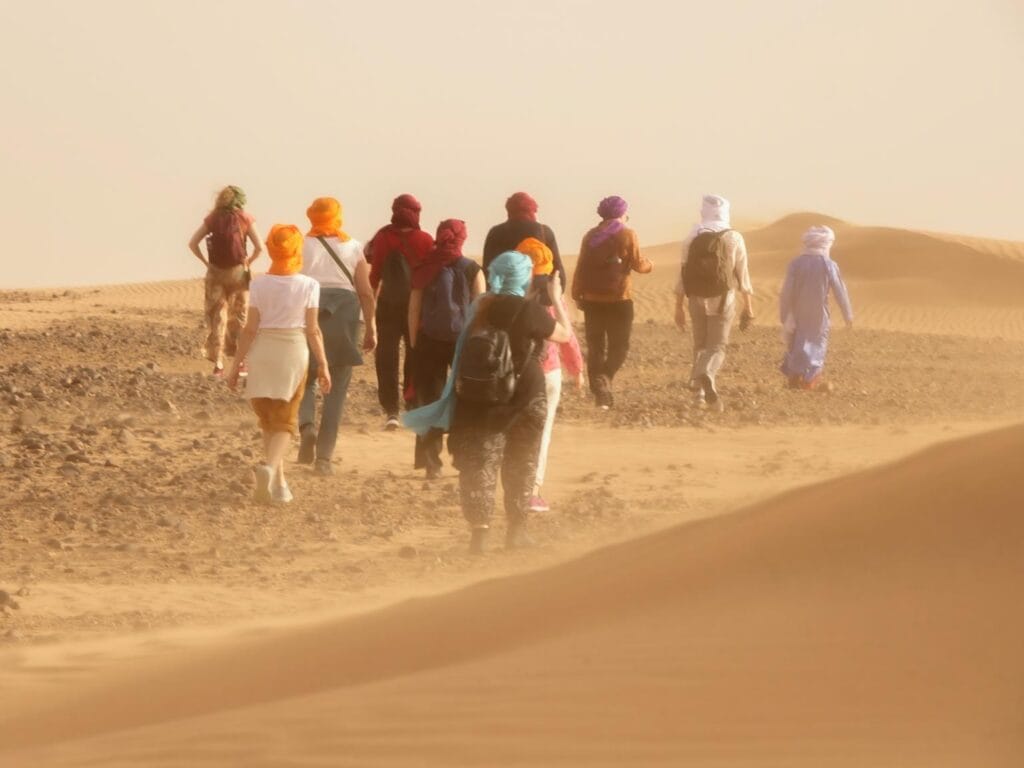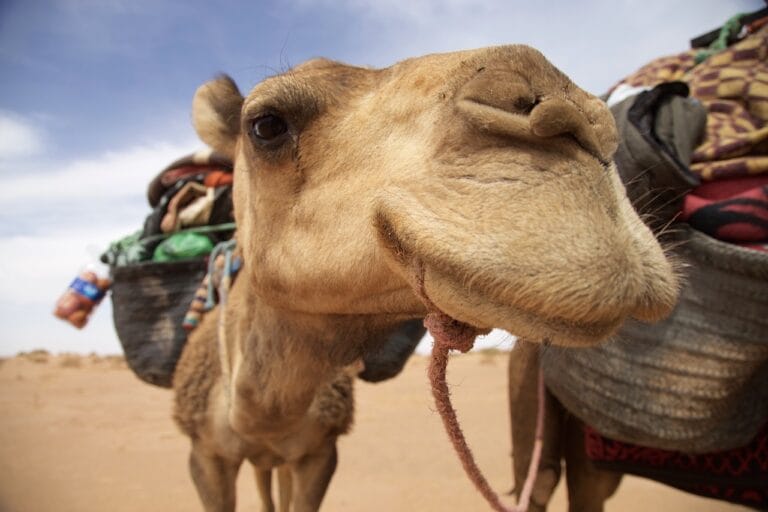
Camel trekking offers a rare sense of simplicity. Days have a clear rhythm: walking through open desert, regular breaks, and time to rest.
We organise the route, logistics, and support. You travel light, eat well, and focus on the journey itself.
The experience suits those looking for calm, focus, and time away from constant input — without giving up comfort or good organisation.
All desert tours start at Desert Camp Chraika near M’hamid El Ghizlane, which is the gateway to the desert.
€ 790,00
€ 670,00
€ 690,00
€ 890,00
€ 390,00
€ 590,00
€ 650,00
€ 690,00
€ 290,00
€ 390,00
€ 790,00
€ 890,00
€ 980,00
€ 690,00
€ 750,00
€ 790,00
Our guests share reflections from their camel trekking journeys in Morocco — from quiet sunset walks to multi-day routes across the Sahara. Their words often highlight the atmosphere of the desert and the care of our local guides from Desert Stories and Desert Camp Chraika. Reviews frequently mention attentive guidance, comfort on the trail, and a balance between adventure, comfort and simplicity.
Each step, each view, and each shared tea with your nomad guide brings you closer to the soul of the desert.
Discover why travellers call our camel tours in Morocco the most authentic way to experience the magic of the Sahara — peaceful and unforgettable.

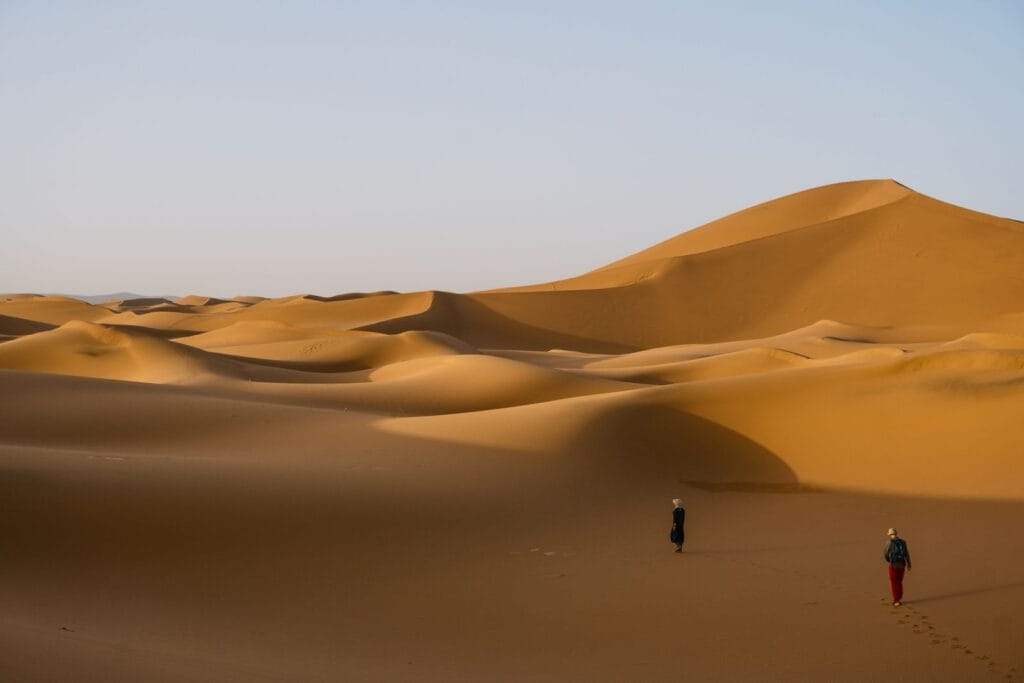
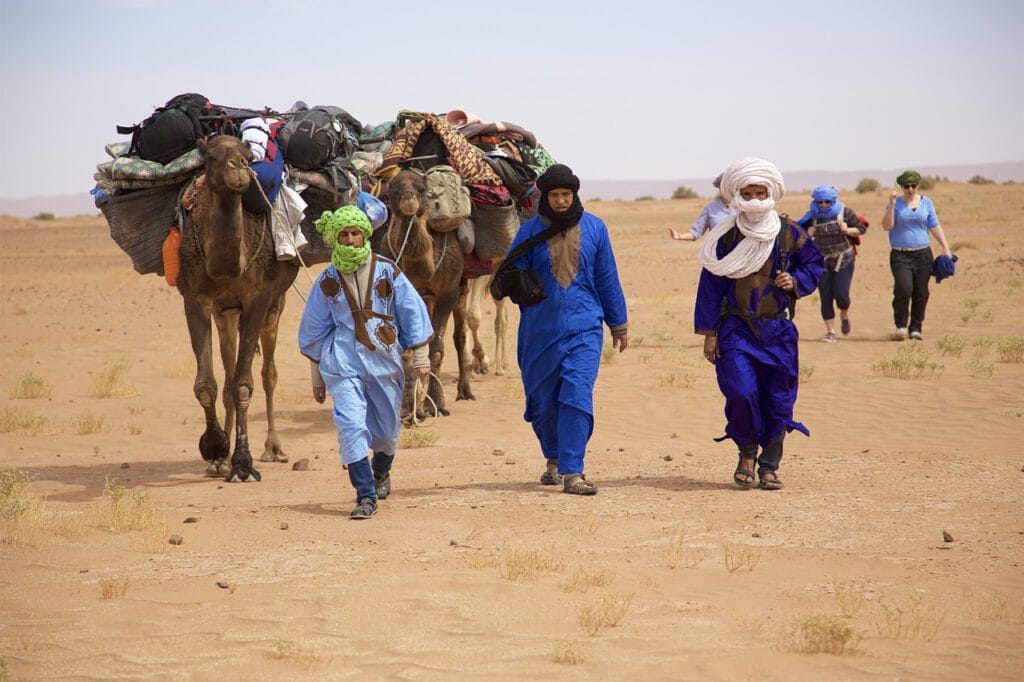
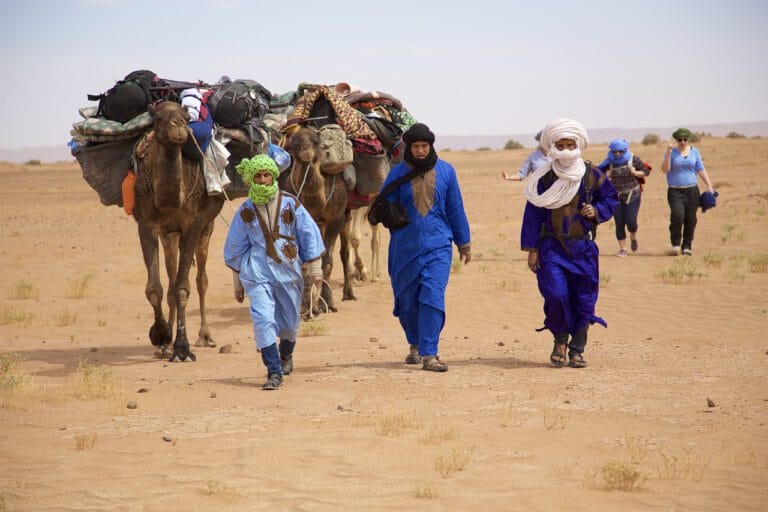
A trekking day begins after breakfast, with the group walking alongside the camels. The route usually covers around 15 kilometres, but the pace can be adjusted to the group. Around midday there is a longer lunch break and time to rest in the shade. Walking continues in the afternoon until the next camp is reached. The trek is designed mainly as a walk, but camels are always available if someone needs to ride part of the way.
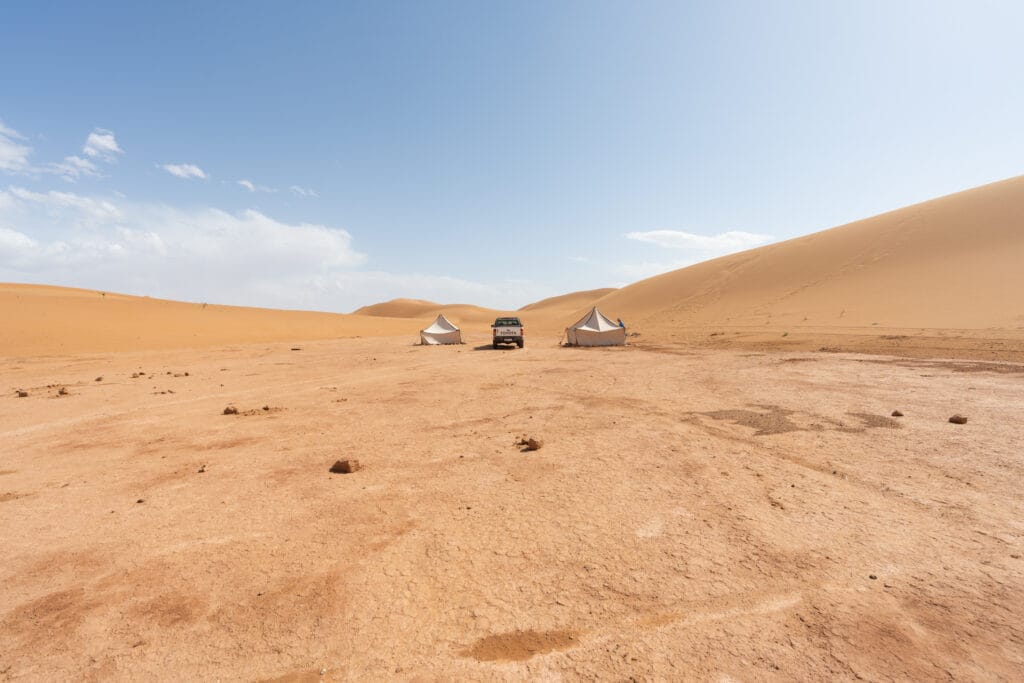
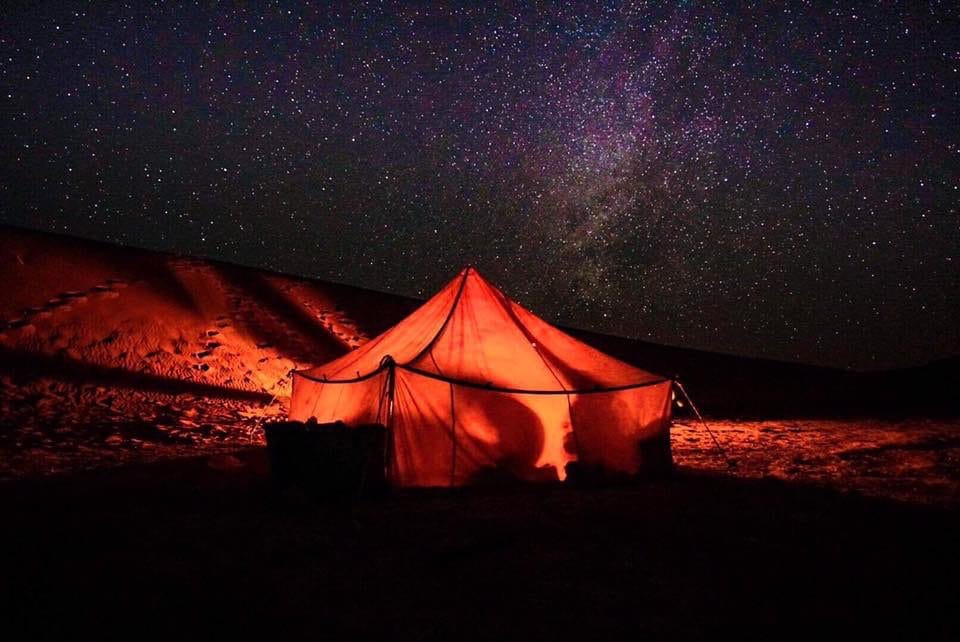
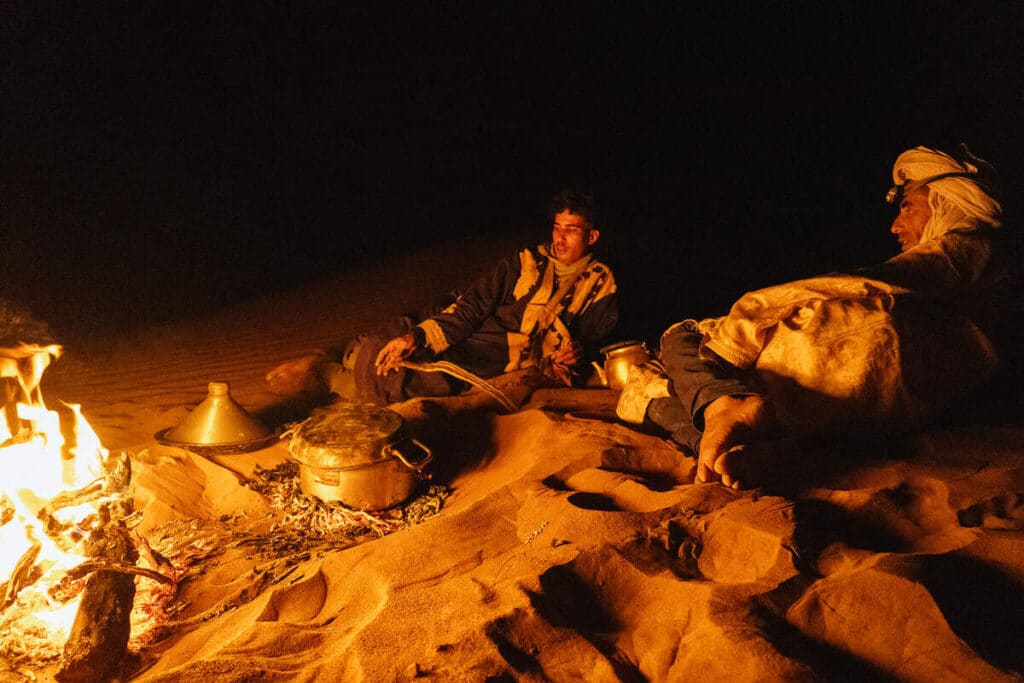
After a day of camel trekking, the evening is spent at camp. Tents are set, dinner is prepared on the fire, and the group gathers to eat together. Meals are simple, yet rich, often followed by music or quiet conversation, before the camp settles into the silence of the desert night. Multi-day treks combine steady travel with basic comfort and a clear daily structure, offering a well-organised way to experience the desert over several days.

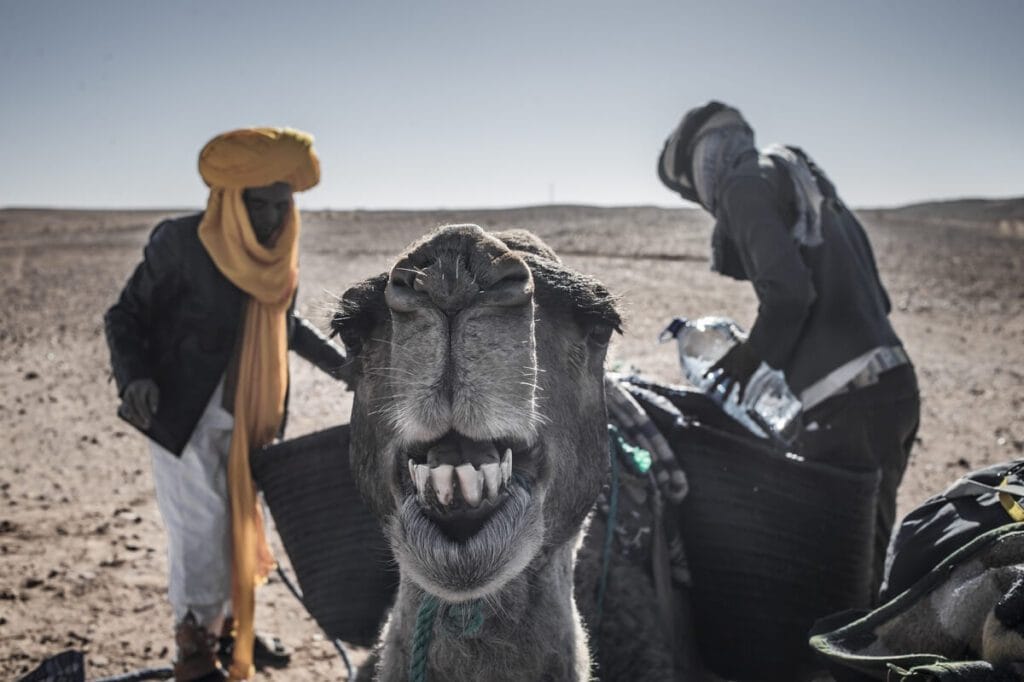
We approach camel trekking as a form of responsible travel, rooted in respect for animals, people, and the desert environment. Camels are well cared for, properly fed, and treated as living companions, not working tools.
We work only with experienced local handlers who know the animals well and adjust pace, distance, and load to their condition. This ensures that each trek remains safe, calm, and ethically run — for both travellers and camels.
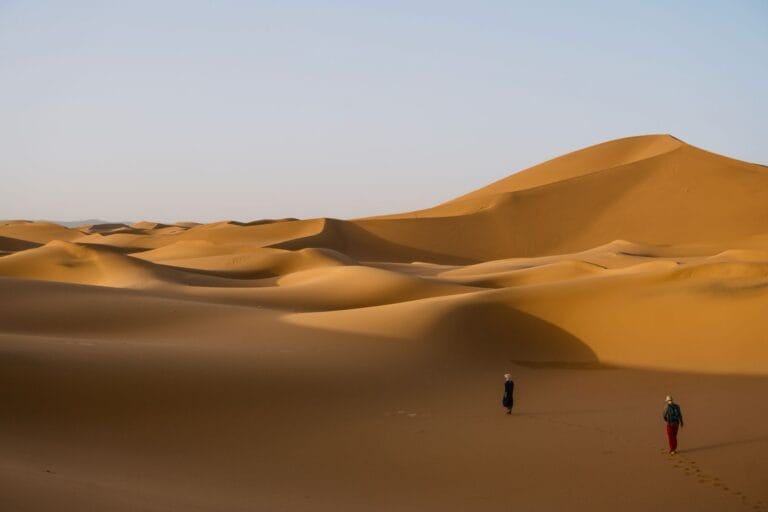
Camel trekking offers a simple and direct way to experience the Moroccan desert. From short walks near the dunes to multi-day journeys deeper into the Sahara, routes are adapted to different durations and comfort levels.
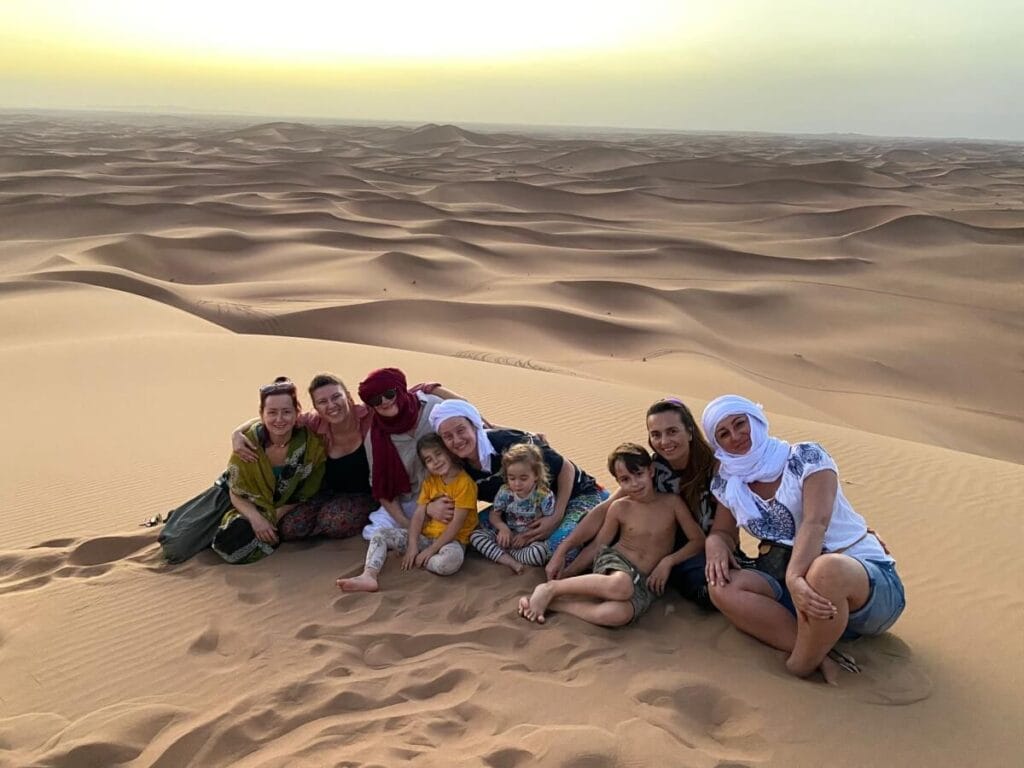
Small moments stay with travellers — tea shared in the shade, evening light on the sand, a quiet night at camp. Whether the journey lasts a few hours or several days, the experience remains grounded in desert life and its natural pace.
Our treks are led by local desert guides who live and work in the Sahara. Routes, pace, and daily rhythm come from real experience, not fixed scripts.
Each journey follows a simple, well-organised structure. Distances, breaks, and rest are planned in advance, with flexibility to adjust to the group.
Days are balanced with proper meals, regular breaks, and time to rest. Even multi-day treks remain accessible to travellers without prior trekking experience.
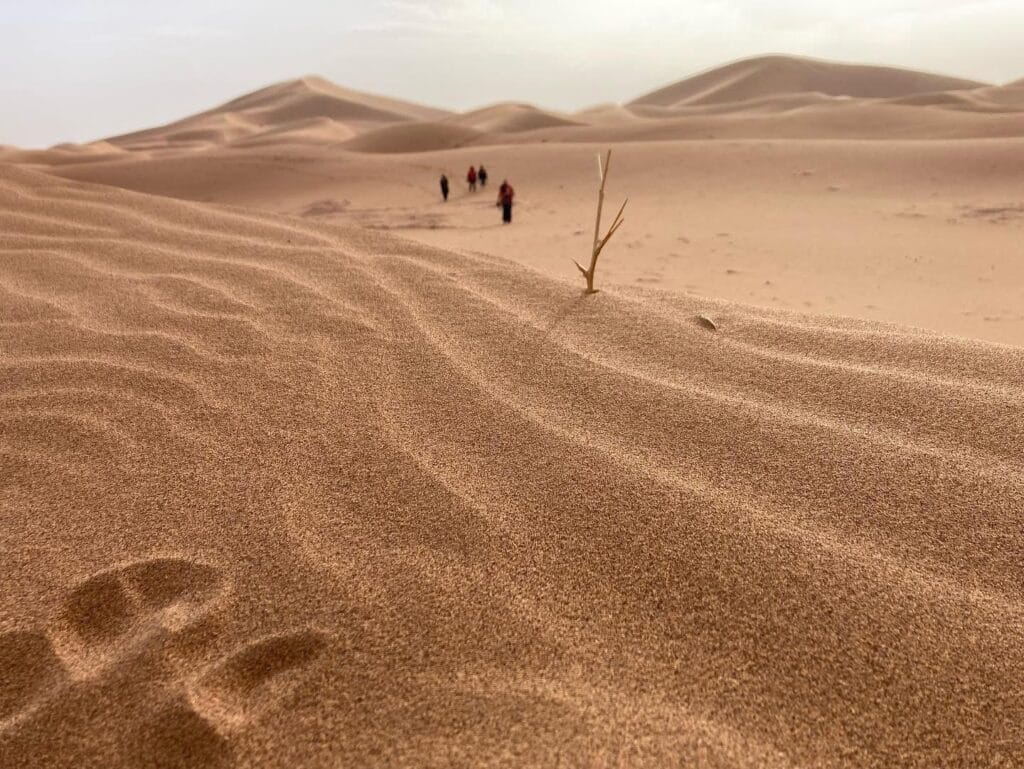
The experience balances effort and ease — walking through open desert, relying on a small group and simple routines, sharing food and time without distractions. The trek becomes less about distance covered and more about being fully present in the journey.
This is a way of travelling that feels grounded, physical, and deeply memorable — epic in its scale, but calm in its pace.
Plan your camel trek in Morocco with confidence.
Below you’ll find answers to the most common questions travellers ask before booking a camel tour.
Days follow a simple routine. Walking begins in the morning after breakfast, followed by a longer lunch break and time to rest in the shade. In the afternoon, the group continues at a steady pace until reaching the next camp. Evenings are calm and unhurried, focused on rest and shared meals.
Camel trekking is moderately physical but accessible to most travellers in good general health. The journey is based on walking at a steady pace, with regular breaks and time to rest. Distances are planned realistically and can be adjusted to the group, so it is not an endurance challenge or a race.
Comfort is simple and well considered. Camps are arranged to allow proper rest after walking, with time to eat, relax, and sleep. We provide mattresses, warm blankets, and all essential camping equipment. Meals are freshly prepared, and evenings remain calm and unhurried. Many guests appreciate this simplicity, often discovering that fewer comforts are needed when the rhythm slows and the focus shifts to rest and presence.
The trek focuses primarily on walking, with camels accompanying the journey. Riding is available when needed, but the experience is designed around steady movement on foot, allowing time to observe the landscape and settle into the rhythm of the desert.
For camel riding in Morocco, wear light, breathable clothes that cover your skin from the sun. We recommend:
No. Camel trekking is designed mainly as a walk alongside the camels. Riding is always optional. If someone feels tired at any point, a camel is available to ride for part of the route. This flexibility allows everyone to find their own balance during the trek.
Yes. Many of our guests experience the desert for the first time during a camel trek. The pace is gentle, the structure is clear, and the guides provide support throughout the journey. No previous trekking or desert experience is required.
Packing is kept simple. Comfortable walking shoes, light layers, sun protection, and a small daypack are usually sufficient. Before the trek, you receive a clear packing list so you know exactly what is needed and what is not.
Camel trekking is most comfortable from autumn to spring, when temperatures are milder. Summer treks are possible but require early starts and careful pacing due to heat. We always adapt routes and schedules to seasonal conditions.

Camel trekking is shaped by shared routines. Walking together in the caravan during the day, collecting wood before sunset, cooking on the fire, and eating together once camp is set. Evenings often unfold around the fire, with time for conversation, music, or simply sitting quietly as the desert cools.
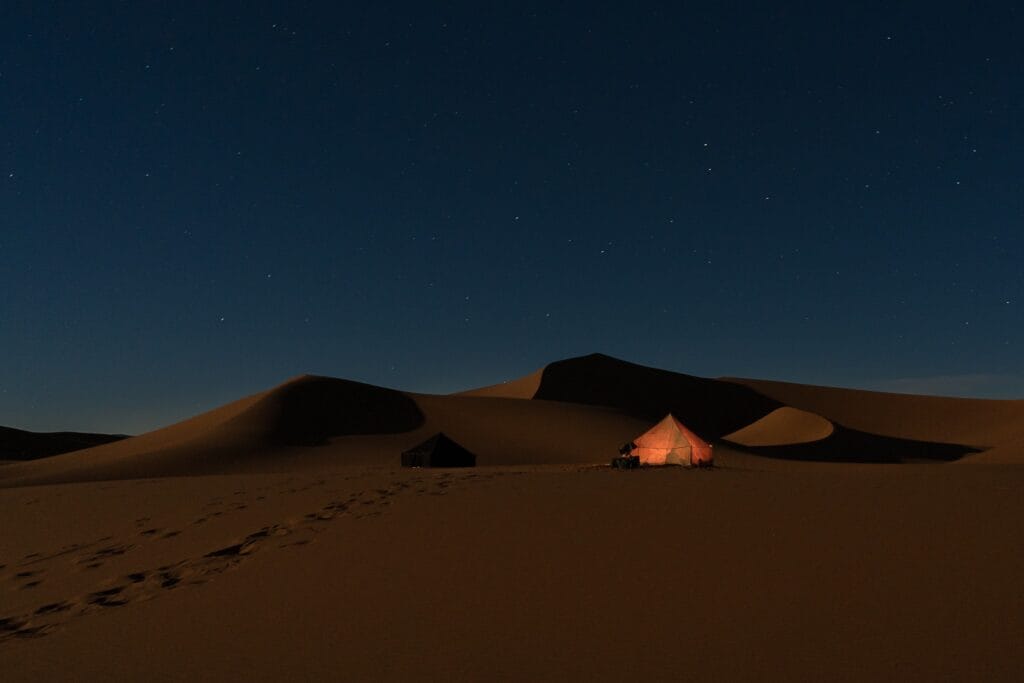
Nights are spent under open, star-filled skies. Mornings begin slowly, returning to the rhythm of walking with the camels. Culture is present in these everyday actions — not explained or staged, but lived through movement, work, food, and time spent together on the trail.
Booking is simple and secure. Contact us to plan your camel trek.
Choose from our carefully designed tours, or create a journey shaped around your interests and travel rhythm.
Whether you focus on nature, culture, or time outdoors, the itinerary follows your pace and priorities.